


Weeknights
One dinner, three diets: cooking for a vegetarian, a meat-eater and a picky kid
You're not running a restaurant. The base-plus-toppers method feeds a vegetarian, a meat-eater and a picky kid from one dinner, without cooking three separate meals.
It's Tuesday, and you have three pans going. One has chicken for the meat-eater, one has a tofu stir-fry for the vegetarian, and the third has plain buttered noodles for the seven-year-old who has recently decided that sauce is a form of betrayal.
Twenty minutes later, everyone eats something different, the sink is full, and you realize you've become a short-order cook in a restaurant with no menu, no prices and no tips.
There's a better way, and it isn't a magical recipe everyone loves. It's a change in how you build dinner.
The short-order cook trap
Nobody sets out to cook three dinners a night. It creeps up on you. One person goes vegetarian, which is easy enough at first. Then a kid enters a phase. Then someone's "cutting back on carbs." Each change is small and reasonable, and each one gets its own pan.
The trouble is that the effort doesn't add, it multiplies. Three dinners means three sets of timing to juggle, three things to shop for, and three times the washing up. And it quietly teaches everyone at the table that dinner is something you order, not something you share.
The fix is to stop thinking of dinner as a single finished dish and start thinking of it as parts.
Base plus toppers
Here's the whole method in one sentence: cook one shared base, then let people finish their own plates with toppers.
The base is the bulk of the meal and the part most people agree on. Rice, pasta, tortillas, potatoes, a pot of beans, roasted vegetables, a big salad. The toppers are where the differences live: the protein, the sauce, the heat, the cheese, the crunchy bits.
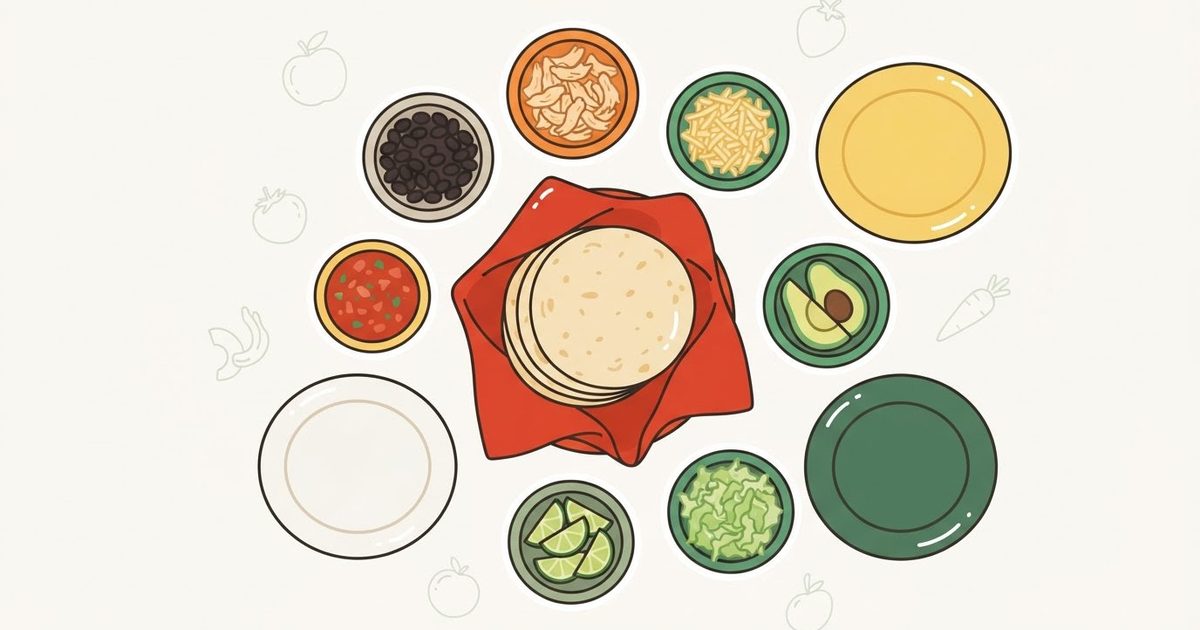
Think about a burrito bowl. The rice, beans, corn, lettuce and salsa are for everyone. The meat-eater adds chicken. The vegetarian adds extra beans and avocado. The picky kid has plain rice, some cheese and three pieces of corn, arranged carefully so they don't touch. One dinner. Three plates. You cooked one meal and a side of chicken.
It works because almost every diet disagreement is about one or two components, not the whole dish. So you keep those components separate and everything else together.
Build-your-own nights
Some dinners are already built this way. They're your best friends on a mixed-diet weeknight.
- Tacos. Tortillas, beans, a meat filling, and every topping you can find. Kids love assembling them, even if they mostly eat the cheese.
- Bowls. A grain, a roast vegetable tray and a few toppings. Rice, quinoa, noodles: whatever's in the cupboard.
- Pasta. Cook the pasta plain and keep the sauces apart. Marinara for one, pesto for another, butter and parmesan for the purist. Meatballs on the side, not in the sauce.
- Pizza. Store-bought dough or flatbreads, a spread of toppings, everyone makes their own. Bake them on the same tray.
- Baked potatoes. The most underrated build-your-own dinner there is. Chili, beans, broccoli, cheese, sour cream, bacon on the side.
What these share is a neutral base and toppings that stay in their own bowls until the last second. Put them on the table family-style and let people serve themselves.
Cook the protein apart, everything else together
For dinners that aren't naturally build-your-own, use a simpler rule: cook the protein separately and share the rest.
A sheet-pan dinner works well. Roast a big tray of vegetables and chickpeas for everyone. Roast chicken thighs on a second, smaller tray. Same oven, same time, same seasoning if you like. A curry or a chili can work the same way: make the vegetable and bean version as the main pot, then brown some ground meat in a separate pan and stir it into portions for the people who want it.
This flips the usual order. Instead of making a meat dish and figuring out what the vegetarian can eat, you make the vegetarian dish the main event and add meat as a topper. It's easier to add than to take away. Nobody can take the beef out of a bolognese.
If you're cooking a smaller portion of the meat, don't forget to shrink the seasoning and the pan too. That kind of kitchen math trips everyone up the first time.
Picky kids: an approach, not a battle
Picky eaters are their own category, and plenty of people have strong opinions about them. One well-known approach comes from the dietitian and family therapist Ellyn Satter, whose division of responsibility in feeding is widely cited. In her model, parents decide what, when and where food is served, and children decide how much and whether they eat it. Parents are encouraged to be considerate of children's limited food experience "without catering to likes and dislikes."
Base-plus-toppers fits that idea neatly. You decide what goes on the table. Make sure there's at least one thing the picky kid usually eats, like the plain rice, the bread or the corn. Then let them serve themselves. Nobody has to negotiate over a plate that's already been assembled.
This isn't parenting advice, and every child is different. If you're worried about your child's eating, talk to your pediatrician. But as a cooking strategy, a table full of separate parts tends to lower the temperature at dinner for everyone, including the cook.
When it's an allergy, not a preference
Everything above is about preferences. Allergies are different, and this article isn't the place for allergy advice. If someone at your table has a food allergy, the parts approach can help, but it doesn't make a meal safe on its own. Shared spoons, cutting boards, pans and fryer oil can carry allergens from one dish to another (this is called cross-contact), and allergens hide in sauces, stocks and seasoning blends. Read every label, every time, and ask the person with the allergy, or their parent, what's safe. The FDA keeps a list of the nine major food allergens in the US. Nothing here is a substitute for reading labels or for advice from a doctor.
Plan the week so nobody cooks twice
The parts approach really pays off when you plan a few days at once. If you're cooking components anyway, cook extra of the ones that travel.
- Make a big pot of something neutral early in the week. Rice, a tray of roast vegetables or a pot of black beans can show up in three different dinners.
- Cook one protein for the meat-eaters and repurpose it. Monday's roast chicken is Wednesday's quesadilla filling.
- Keep a few vegetarian proteins on hand. Eggs, canned chickpeas, a block of tofu, lentils, frozen edamame. Any of them can turn a shared base into a full meal in ten minutes.
- Rotate the build-your-own nights. Tacos Tuesday, bowls Thursday, pizza Friday. Once it's a habit, you stop deciding and start assembling. (If deciding is the hardest part of your evening, what's for dinner has a few more structures that help.)
A week planned like this means you only ever make one dinner a night, with one or two extra bowls on the side. That's a big difference from three pans.
Try it tonight
Pick tonight's dinner and look at it as parts. What's the base everyone can eat? What's the one component that causes arguments? Cook that one thing in its own pan or put it in its own bowl, put everything on the table, and let everyone build their own plate.
Then sit down with them. That's the part you were missing when you were standing at the stove with three pans going.