


Weeknights
Cook with what you have: a fridge-first method that beats recipe search
Typing three ingredients into a search box rarely gives you dinner. A simple formula does. Here's how to turn a half-empty fridge into a real meal on a weeknight.
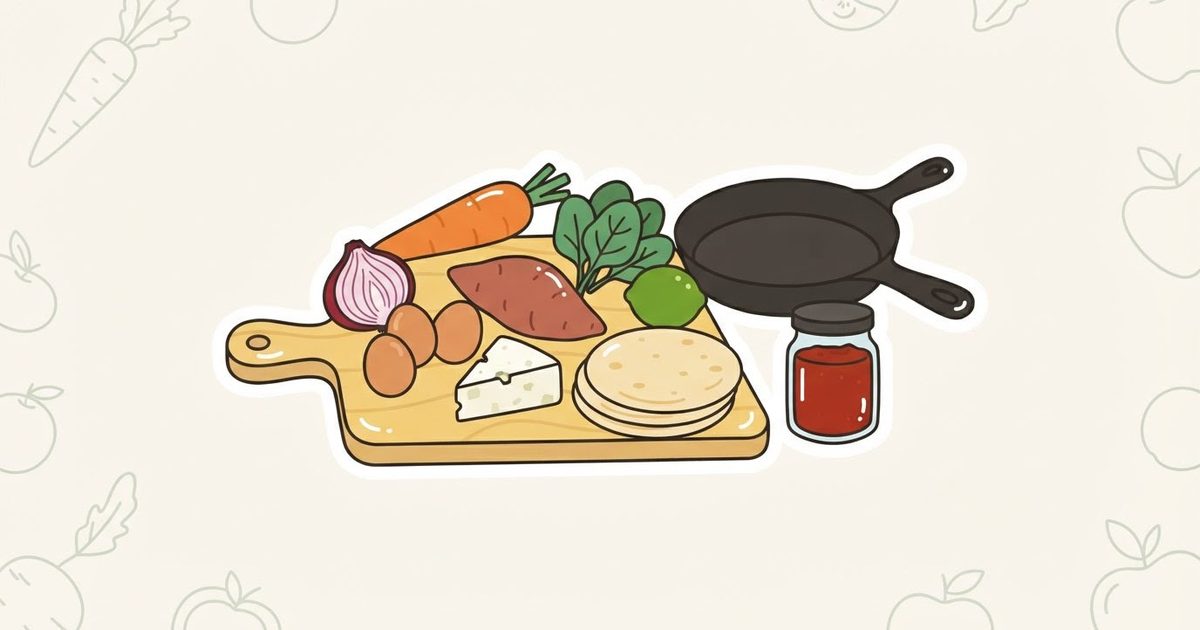
You open the fridge and do the inventory out loud. Half an onion. Two eggs. A sweet potato that has started growing ambitions. Some spinach, a heel of feta, a lime, and the last few tortillas from the weekend.
So you type "sweet potato spinach feta eggs" into a search box and get back a recipe for a quiche that needs heavy cream, a pastry shell and an hour you don't have.
That's the moment most of us give up and order something. But the fridge was never the problem. The search was.
Why ingredient search disappoints
Ingredient search sounds perfect. Tell it what you have, it tells you what to make. In practice, it rarely goes that way.
The first problem is that recipes are written for shopping, not for using up. Most recipes assume you'll buy what's listed. So a search for your five ingredients turns up recipes that use three of them and need six more, including one you've never heard of.
The second problem is that a search treats every ingredient as equal. It doesn't know that the spinach has a day left and the feta has weeks. It doesn't know you're tired, or that you have twenty minutes, or that you'd happily skip the onion.
And the third problem is the biggest one: you don't need a recipe for most weeknight dinners. You need a shape. Recipes are great when you want to cook something specific. When you want to cook what's there, a formula works better.
The formula: base, protein, sauce, something fresh
Almost every satisfying weeknight dinner has four parts:
- A base. Rice, pasta, noodles, bread, tortillas, potatoes, grains. This is what makes it a meal rather than a snack.
- A protein. Eggs, beans, chickpeas, lentils, tofu, leftover chicken, canned fish, sausage, cheese.
- A sauce. Something that ties it all together and makes it taste like you meant it.
- Something fresh or crunchy. Herbs, a squeeze of citrus, raw vegetables, toasted nuts, pickles, a handful of greens. This is the part people skip, and it's the part that makes the difference between "fine" and "oh, that's good."
Once you see dinner this way, the fridge stops looking empty. That sad sweet potato is a base. The eggs are a protein. The lime is your fresh thing. You only need a sauce, and you can make one in five minutes (more on that below).
The formula isn't strict. Some nights the base and the protein are the same thing, like a bowl of beans. Some nights the sauce is just good olive oil and salt. It's a checklist, not a rulebook. If your plate has something filling, something substantial, something saucy and something bright, it'll work.
Six formats that take anything
The formula tells you what to gather. A format tells you what to do with it. These six can absorb almost any combination of leftovers and odds and ends.
- Fried rice. Cold cooked rice, any vegetable, an egg or leftover meat, soy sauce. The classic fridge-clearer for a reason.
- Frittata or scramble. Eggs will hold together almost anything: cooked potatoes, wilting greens, the last of the cheese, half a pepper.
- Grain bowl. A base, roasted or raw vegetables, a protein and a sauce on top. Nothing has to match. It's a bowl.
- Tacos or quesadillas. Tortillas are the most forgiving base in the kitchen. Beans, eggs, roasted vegetables, leftover meat, cheese: all of it works.
- Pasta. Cook the pasta, sauté whatever vegetables you have in oil and garlic, toss with a splash of the pasta water and cheese. Done.
- Soup. Onion, any vegetables, a can of beans or tomatoes, stock or water, and time. Soup is where tired vegetables go to retire with dignity.
You'll notice none of these care much about exact amounts. That's the point. They're formats built for whatever's there. If you're feeding people with different tastes, bowls and tacos have the bonus of letting everyone build their own plate (there's more on that in one dinner, three diets).
The staples that make it work
The formula only works if a few things are always in the house. You don't need a huge pantry. You need the right short list.
| Category | Keep on hand |
|---|---|
| Bases | Rice, a pasta shape, tortillas, a loaf of bread in the freezer |
| Proteins | Eggs, canned beans or chickpeas, canned tuna, a block of cheese |
| Flavor | Soy sauce, a vinegar, a jar of something spicy, garlic, onions |
| Fat | Olive oil, butter |
| Fresh-ish | Lemons or limes (they keep a long time), frozen peas or spinach |
| Crunch | A bag of nuts or seeds, something pickled |
With these on hand, almost any leftover vegetable or half-used ingredient is a dinner waiting to happen. Without them, you're back to searching for a quiche.
A good habit: when you use the last of a staple, add it to the shopping list right away. Running out of soy sauce is how fried-rice night turns into takeout night.
Four five-minute sauces
Sauce is what turns a pile of ingredients into a dinner. These four take a jar, a fork and about five minutes. Taste and adjust each one. They're starting points, not exact formulas.
- Soy-ginger. Soy sauce, a little honey or sugar, grated garlic and ginger, a splash of vinegar, a few drops of sesame oil if you have it. For fried rice, noodles, bowls and anything with an egg on top.
- Lemon-yogurt. Plain yogurt, lemon juice, grated garlic, salt, and a big pinch of whatever herbs or spices you like. For roast vegetables, grain bowls and anything off the grill.
- Peanut-lime. Peanut butter loosened with hot water, lime juice, soy sauce, a little sugar and something spicy. For noodles, raw vegetables and tofu.
- Basic vinaigrette. Three parts oil to one part vinegar or lemon juice, a spoon of mustard, salt and pepper. Shake it in a jar. For salads, obviously, but also warm potatoes, beans and grains.
Make a double batch on the weekend and you'll have a head start on two weeknight dinners.
A worked example: a real Thursday fridge
Let's go back to that fridge from the beginning: half an onion, two eggs, a sweet potato, spinach, a wedge of feta, a lime and some tortillas.
Run the formula. The base is the sweet potato and the tortillas. The protein is the eggs and feta. The fresh thing is the lime and the spinach. The sauce is missing. Let's make one.
Pick a format. Tacos. The tortillas want to be used, and tacos let you combine everything without fuss.
Cook it.
- Dice the sweet potato small, so it cooks fast. Fry it in a skillet with oil and salt over medium-high heat until it's browned and soft, about 12–15 minutes. Add the sliced onion for the last five.
- Toss in the spinach and let it wilt for a minute.
- Push everything to one side and scramble the eggs in the empty space.
- While that's happening, stir together a quick lemon-yogurt sauce, using lime instead of lemon. If there's no yogurt, a squeeze of lime and a spoon of mayonnaise works too.
- Warm the tortillas in a dry pan. Fill with the potato mixture and egg, crumble the feta over the top, add a spoonful of sauce and a squeeze of lime.
That's dinner for two in about 25 minutes. Nothing was bought, nothing was thrown away, and nobody had to hunt for a recipe that matched. It also used up the spinach before it turned, which is a small win against the fridge's usual habit of quietly wasting food.
Could it be better? Sure. A handful of cilantro would be lovely, and some pickled onions would be great. But "could be better" is a high bar for a Thursday.
Tonight: try the formula once
Next time you open the fridge and think "there's nothing to eat," don't search. Get a piece of paper and write four headings: base, protein, sauce, fresh. Fill in what you have under each one. Then pick one of the six formats.
You'll be surprised how often the answer was sitting there the whole time, just waiting for someone to stop looking for a recipe and start looking at the fridge. And on the nights when even that feels like too much, the what's for dinner fallback list has your back.